


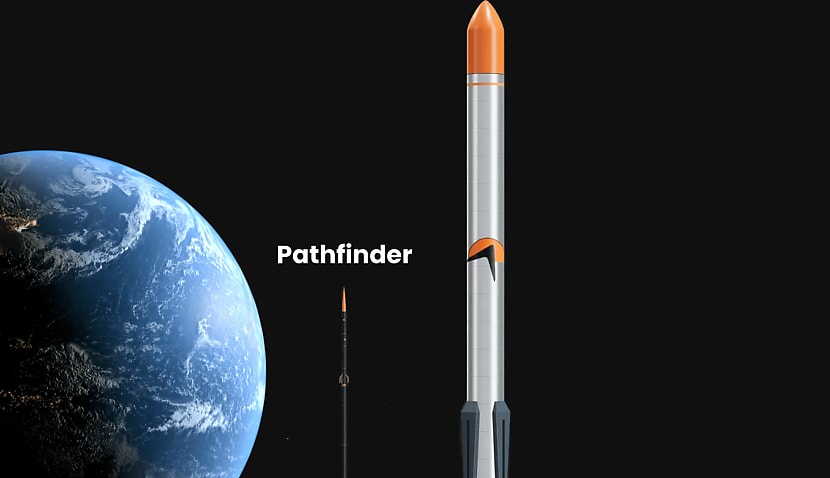
Designed to change how space hardware is developed and tested, the rocket will fly over a tonne of payload to space and bring it home again so companies can test, fix and refly their hardware. The first flight is planned for the end of 2027.
Developing hardware for space is slow, expensive and risky. Engineers can test some things on the ground, like vibration and heat, but recreating real space conditions is extremely hard.
Today, the only way to prove a satellite works in space is to launch it, and that’s a one-way trip. Getting hardware tested in space takes at least 18 months and millions of dollars. Around one in four small satellite missions fail, according to NASA research.
When they do, the satellite is usually lost for good, along with years of work, and another piece of space junk is left in orbit.
Sunburnt Space’s next rocket changes that. Payloads stay attached to the rocket, are tested in real space conditions and return to Earth.
If anything breaks, customers fix it and fly again before committing to orbit, in weeks rather than years and at a tenth of the cost.
The same rocket can also bring research and manufacturing payloads home from space, fly hardware downrange or point to point, and carry late-loaded payloads for time-sensitive missions.
“Getting to space and back should be routine,” said Brad Younger, founder and CEO of Sunburnt Space.
“We’re starting with satellite testing because that’s where the pain is today. Fly it, see what breaks, fix it and fly again.”
The new rocket will fly to altitudes between 140 kilometers and 400km, launching from Australia. It’s designed to grow into a two-stage orbital launcher, so customers who test with us can later launch to orbit on the same rocket.
Sunburnt Space will fly every month, like an airline timetable to space and back. Customers book a flight, test their hardware, fix anything that breaks, and are back on the next flight weeks later.
 Want to see more stories from trusted news sources?
Make Space Connect a preferred news source on Google.