


The US Air Force Research Laboratory (AFRL) has successfully demonstrated the use of an artificial neural network to autonomously control the attitude of a satellite in orbit, representing a significant step towards more intelligent and resilient military and commercial spacecraft.
The on-orbit demonstration saw a machine learning algorithm assume responsibility for controlling the satellite’s bus – the core spacecraft platform that manages functions such as attitude control, power generation, communications and thermal management. Rather than relying exclusively on traditional rule-based flight software, the neural network processed sensor inputs in real time to determine and execute the most appropriate control actions while maintaining stable spacecraft operations.
While artificial intelligence has been widely tested in ground-based simulations, successfully employing a neural network to control a spacecraft in the harsh environment of space represents a major technological milestone. Spacecraft operate under severe constraints, including limited computing power, communication delays and exposure to radiation, requiring autonomous systems to make rapid and reliable decisions without constant oversight from operators on Earth.
Brigadier General Douglas P Wickert, Air Force technology executive officer and AFRL Commander, said: “We have a responsibility to translate advances in AI to give our airmen and Guardians trustworthy autonomous teammates to meet today’s fast-moving challenges.”
The achievement forms part of a broader shift in military space operations towards greater autonomy. As the number of satellites in orbit continues to grow and potential adversaries develop capabilities to disrupt communications and ground control networks, future spacecraft will increasingly need to continue operating even when disconnected from terrestrial operators.
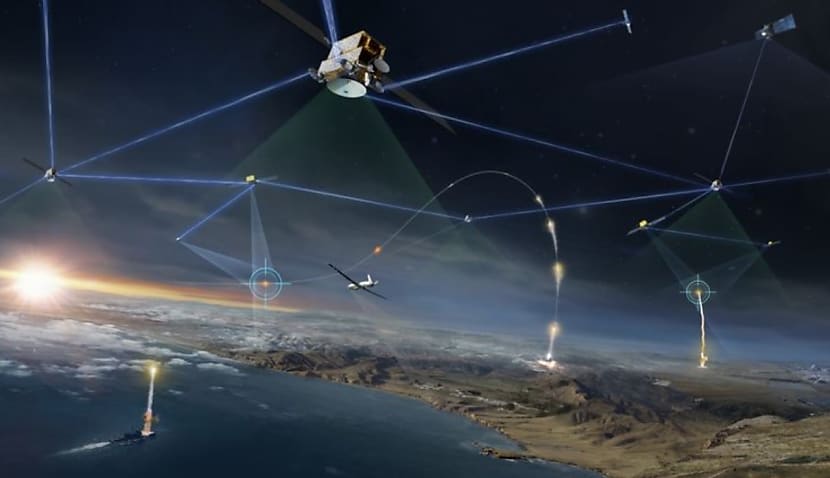
For the United States Space Force and its allies, autonomous spacecraft are expected to become a critical component of resilient space architectures. Rather than depending on a handful of highly capable satellites, future constellations are likely to comprise large numbers of interconnected spacecraft capable of collaborating, reconfiguring missions and responding to threats with minimal human input.
“The AFRL vision is to win the future by executing our mission to discover, develop and deliver war-winning science and technology,” Brig Gen Wickert said.
Neural network-based control systems also offer potential advantages over conventional spacecraft software. Machine learning algorithms can adapt to changing conditions, compensate for unexpected disturbances and optimise control inputs in ways that would be difficult to achieve using fixed programming. Over time, this could improve satellite longevity, reduce fuel consumption and enable spacecraft to continue operating despite component failures or damage.
The implications extend well beyond defence. Commercial satellite operators are increasingly exploring artificial intelligence to automate routine spacecraft management, optimise constellations and reduce operating costs, while civil space agencies are investigating similar technologies for deep-space exploration missions where communication delays make continuous ground control impractical.
Dr Steve “Cap” Rogers, AFRL senior scientist for AI enabled autonomy said: “We used start-up-like agility to take a reinforcement learning model from the lab directly to orbit. This flight is a perfect example of ACT3’s core mission to operationalise AI at scale for the Air and Space Force.”
For Australia, the demonstration highlights another emerging technology likely to shape future collaboration under AUKUS Pillar 2 and broader allied space initiatives. As the Australian Defence Force expands its sovereign space capabilities and invests in resilient satellite networks, autonomous spacecraft technologies are expected to become increasingly important for intelligence, surveillance, communications and positioning systems operating across the Indo-Pacific.
Although considerable testing remains before neural network flight control becomes standard across operational fleets, AFRL’s successful in-orbit demonstration provides compelling evidence that artificial intelligence is moving from an experimental capability to a practical tool for future space operations. In an era where speed, resilience and autonomy are becoming decisive military advantages, intelligent spacecraft are poised to become a defining feature of next-generation space architectures.
 Want to see more stories from trusted news sources?
Make Space Connect a preferred news source on Google.