


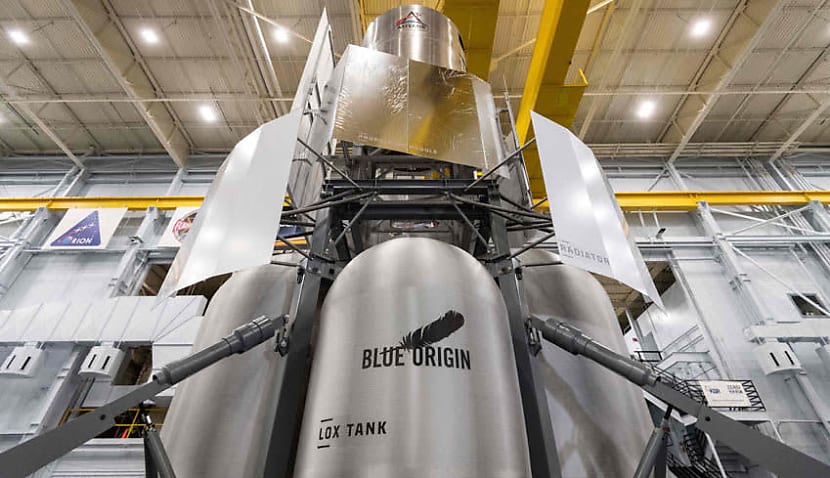
NASA and Blue Origin have taken another major step towards returning humans to the moon, signing a new agreement that will see the company’s New Glenn launch vehicle undergo critical upper-stage testing at NASA’s Stennis Space Center in Mississippi as the United States accelerates preparations for the next phase of the Artemis program.
The agreement, announced under a reimbursable Space Act Agreement, will allow Blue Origin to conduct second-stage hot-fire testing on the historic B-2 Test Stand, with testing expected to commence later this year. The campaign will validate the performance of New Glenn’s upper stage while expanding the rocket’s qualification program ahead of an increasing number of government and commercial missions.
The partnership forms part of NASA’s broader strategy of leveraging commercial industry to deliver the capabilities required for sustained exploration beyond Earth orbit while making greater use of the agency’s world-class testing infrastructure.
NASA administrator Jared Isaacman said closer collaboration with industry would be essential if the United States was to maintain its leadership in space exploration.
“Winning the new space race means moving faster and working alongside a strong commercial industry,” Isaacman said.
“Supporting Blue Origin at NASA’s Stennis Space Center puts world-class American infrastructure to work advancing the capabilities needed to return astronauts to the moon, establish a sustained lunar presence, and prepare for Mars.
“Partnerships like this strengthen our industrial base and help ensure the United States remains the world’s leader in space.”
The B-2 Test Stand has played a central role in America’s space history, having originally been constructed to test the Saturn V rocket stages that carried Apollo astronauts to the moon before later supporting NASA’s Space Launch System Green Run testing campaign ahead of the Artemis I mission.
Now, more than half a century after helping enable the first moon landings, the facility will once again support lunar exploration by validating Blue Origin’s New Glenn launch system.
The rocket’s second stage is powered by two liquid hydrogen and liquid oxygen-fuelled BE-3 engines, producing a combined 400,000 pounds of thrust in the vacuum of space. Under the agreement, NASA will provide engineering support, specialist equipment and dedicated workspaces while drawing on decades of propulsion testing expertise to assist Blue Origin’s test campaign.
Blue Origin chief executive Dave Limp said the partnership reflects the company’s long-term commitment to supporting NASA’s exploration objectives.
“We are proud to partner with NASA and build on our shared commitment to returning America to the moon and our broader mission to build a road to space for the benefit of Earth,” Limp said.
“Stennis helped take Americans to the moon, and through this partnership, it will help take us back.”
The expanded testing program also forms part of Blue Origin’s broader investment in national launch infrastructure, providing additional hot-fire testing capacity while reducing demand on facilities at Cape Canaveral’s Launch Complex 36.
The announcement comes as Artemis enters a more complex operational phase following the success of Artemis II. Future missions will require multiple launches, with NASA’s Orion spacecraft docking in Earth orbit with commercial lunar landers developed by Blue Origin and SpaceX before astronauts continue their journey to the lunar surface.
New Glenn is expected to become a cornerstone of that architecture. Earlier this year, NASA selected Blue Origin’s Blue Moon Mark 1 Endurance lander for one of the agency’s first Moon Base missions, which will deliver scientific payloads to the Shackleton Connecting Ridge near the lunar south pole.
The mission will demonstrate technologies needed to support crewed landings during Artemis IV and Artemis V while laying the foundations for sustained human operations on the moon.
For both NASA and Blue Origin, the latest agreement represents more than a testing contract, it highlights the increasingly integrated relationship between government and commercial industry that is reshaping space exploration, strengthening America’s industrial base and accelerating the technologies needed to establish a permanent human presence beyond Earth.
 Want to see more stories from trusted news sources?
Make Space Connect a preferred news source on Google.