


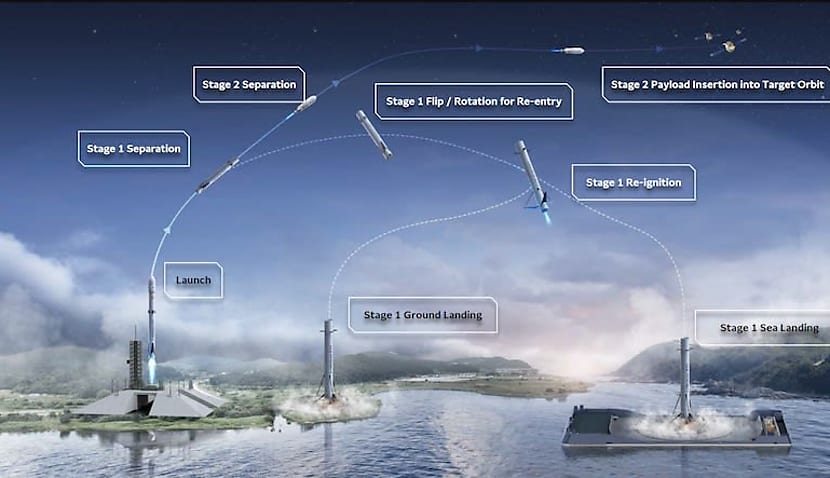
The joint initiative will be overseen by the Korea Research Institute for Defense Technology Planning and Advancement (KRIT) and the program will run through October 2030.
More than 70 representatives from the government, academia and industry attended a meeting in Daejeon for the initiative. Participants included officials from the Ministry of National Defense, the Defense Acquisition Program Administration, KRIT, and technical partners such as Doosan Enerbility, Perigee Aerospace, the Korea Institute of Industrial Technology and leading universities, including Seoul National University, Kookmin University and Pusan National University.
The meeting reviewed development tasks, technical validation procedures and risk-management plans essential to the program’s success.
“We are mobilising our aerospace expertise to develop a high-performance, highly reliable turbopump optimised for methane engines,” said Kim Kyung-nam, head of Korean Air’s Aerospace R&D Center.
“This project will help strengthen Korea’s space industry ecosystem and support the development of military satellite launch vehicles and future national defence needs.”
Methane engines are increasingly being recognised as the preferred choice for reusable launch systems due to their high combustion efficiency and cleaner burn.
Unlike kerosene-based engines, methane engines generate far less soot, making them well-suited for repeated launches.
Leading global aerospace companies such as SpaceX and Blue Origin have already adopted methane engines for their launch systems.
“Developing a methane engine is a crucial step toward positioning Korea as a leader in space defence,” said Son Jae-hong, president of KRIT.
“KRIT will fully support the program by building an innovative research and development framework and a robust defence-space ecosystem to ensure successful completion.”
Korean Air will lead the development of the engine’s turbopump, a core component often described as the heart of the propulsion system.
The turbopump compresses liquid methane and oxidiser at extremely high pressures and speeds.
Its development requires advanced engineering capable of handling cryogenic temperatures of minus 180 degrees to several hundred degrees while rotating tens of thousands of times per minute.
The technologies developed through this program will be instrumental in bolstering Korea’s national defence capabilities and establishing a strategic foundation for the country's rapidly growing commercial “New Space” sector.
 Want to see more stories from trusted news sources?
Make Space Connect a preferred news source on Google.
