


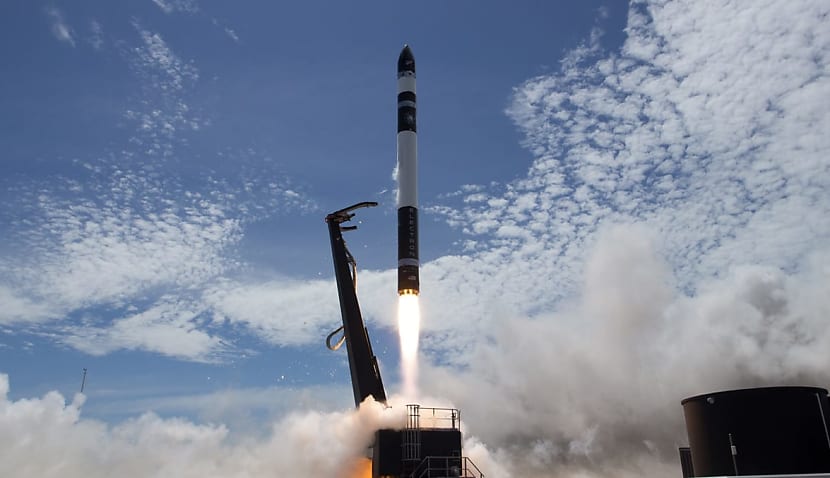
The mission, launched aboard Rocket Lab’s Electron rocket from Launch Complex 1 in New Zealand at 10:19pm NZT on 19 June, established a new benchmark for tactically responsive space (TacRS) capabilities, beating the previous record set by the Victus Nox mission by more than 10 hours.
The mission was conducted for the US Space Force’s Space Systems Command through the Space Safari Program Office, in partnership with the Defense Innovation Unit, and demonstrated the ability to rapidly deploy space-based capabilities in response to emerging threats.
Victus Haze also marked the first time a single prime contractor has delivered an entire TacRS mission package from spacecraft design and manufacturing through to launch and on-orbit operations.
Rocket Lab designed, built and tested the highly manoeuvrable Pioneer spacecraft, integrated it with the Electron launch vehicle, conducted the rapid deployment, and is now operating the satellite in low-Earth orbit.
Following deployment, the Pioneer spacecraft began conducting rendezvous and proximity operations with another satellite, simulating a potential crisis scenario where a spacecraft must rapidly approach, observe and monitor an uncooperative object in orbit.
As space becomes an increasingly contested operational environment, the ability to rapidly launch spacecraft, conduct inspections and collect intelligence in orbit is becoming a critical capability for the United States and its allies.
The Victus Haze mission achieved several major milestones:
- 16 hours, 42 minutes – notice-to-launch: the time between Rocket Lab receiving the launch order from the Space Safari Program Office and Electron lifting off from Launch Complex 1.
- Approximately 4 hours – trajectory planning: Rocket Lab’s guidance, navigation and control team calculated final flight trajectories, updated mission software and coordinated global ground station support ahead of launch.
- 37 hours, 36 minutes – spacecraft commissioning: Rocket Lab fully activated and prepared the Pioneer spacecraft for its first orbital manoeuvre, exceeding the mission’s 72-hour commissioning requirement by more than 34 hours.
Rocket Lab founder and chief executive Sir Peter Beck said the mission demonstrated a new model for rapidly delivering national security space capabilities.
“Our launch-plus-spacecraft integrated mission capability is transformative for responsive space,” Beck said.
“By launching on demand with spacecraft at the ready, we’ve shown we can secure and defend national space interests rapidly. This is what modern space power looks like – the ability to reinforce and reshape national security space architecture when required.”
US Space Force Lieutenant Colonel Lincoln Miller, the Space Safari system program manager, said Victus Haze represented the culmination of years of development in tactically responsive space operations.
“Victus Haze culminates the TacRS ‘crawl, walk, run’ phase of on-orbit demonstrations,” Lt Col Miller said.
He said conducting rendezvous and proximity operations within such a short time frame was a significant technical challenge, particularly in a crisis environment.
The mission demonstrated the ability to activate a complex spacecraft within 72 hours and immediately begin orbital operations, reducing the risk of adversaries gaining a first-mover advantage in space.
The successful launch builds on Rocket Lab’s growing track record in responsive space operations, including its 2024 achievement of launching two Electron missions from different hemispheres within 24 hours.
The company’s ability to compress traditional space acquisition timelines which can often take years, has been enabled by extensive vertical integration across spacecraft and launch systems.
The Pioneer spacecraft uses a range of Rocket Lab-developed components, including propulsion systems, solar arrays, reaction wheels, radios, star trackers, structures, propellant tanks and flight software.
By controlling much of the spacecraft supply chain internally, Rocket Lab has reduced reliance on external suppliers, improved integration timelines and increased its ability to rapidly deliver operational space capabilities for the US and allied partners.
The Victus Haze mission highlights the growing importance of responsive space capabilities as nations seek greater resilience, intelligence and operational flexibility in an increasingly contested domain.
 Want to see more stories from trusted news sources?
Make Space Connect a preferred news source on Google.