


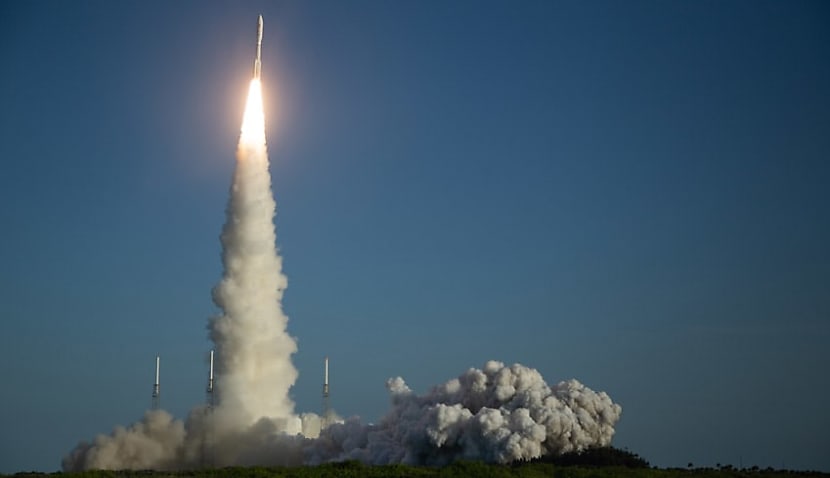
An Atlas V rocket carrying the LEO 8 mission lifted off from Space Launch Complex-41 at Cape Canaveral Space Force Station on 2 July, delivering all 29 satellites into orbit.
The mission represents another significant achievement for ULA, with commercial launches now accounting for around half of the company’s overall business as demand for satellite deployment continues to grow.
Gary Wentz, ULA vice president of Atlas and Vulcan Programs, said the company has played a critical role in supporting Amazon’s ambitious satellite network since the program’s inception.
“ULA has been a trusted launch partner since the beginning of the Amazon LEO program,” Wentz said.
“Each launch advances Amazon’s vision for worldwide connectivity, and we’re proud to help build the backbone of its commercial architecture.”
The successful mission brings the total number of Amazon LEO satellites launched by ULA to 224, out of a planned constellation of more than 375 spacecraft, moving the network closer to commercial operations.
Melissa Wuerl, Amazon LEO director of launch systems, said the Atlas V had provided a strong foundation for the constellation’s deployment and highlighted the company’s preparations for its next phase of launches using ULA’s new Vulcan rocket.
“Atlas V has played a critical role in the early deployment phase for Amazon LEO, launching 224 satellites with a 100 per cent success rate across all eight missions,” Wuerl said.
“We’re excited to build on that foundation with ULA as we transition to Vulcan.
“With hundreds of flight-ready satellites standing by at the Cape and a new dedicated vertical integration facility ready to support the first Vulcan LEO mission and subsequent launches, we have a clear path to significantly increase launch cadence.
“That will allow us to rapidly expand network coverage following our initial service rollout later this year."
The latest mission reinforces ULA’s growing position in the commercial launch market, with the company continuing to balance government, national security and commercial missions while supporting the deployment of next-generation satellite constellations.
Looking ahead, ULA’s Vulcan launch vehicle is expected to assume a greater share of Amazon’s future deployment campaign, offering increased performance and launch flexibility as the constellation moves towards full operational capability.
 Want to see more stories from trusted news sources?
Make Space Connect a preferred news source on Google.