


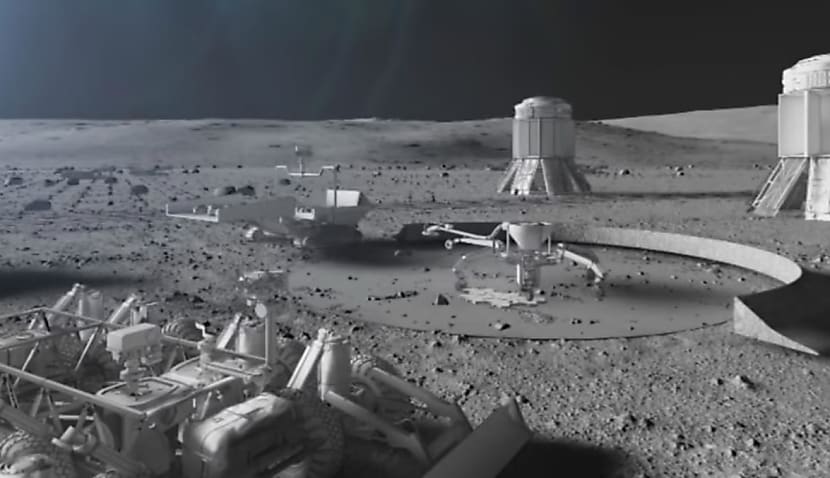
The announcement marks one of the most significant expansions of the Artemis program to date, with NASA confirming the first three “Moon Base” missions, fresh commercial partnerships and a roadmap designed to pave the way for astronauts to return to the lunar surface later this decade.
NASA administrator Jared Isaacman described the planned moon base as humanity’s first true foothold beyond Earth.
“The moon base will be America’s and humanity’s first outpost on another celestial world,” Isaacman said.
“Every mission, crewed and uncrewed, will be a learning opportunity as we return to the lunar surface, build the infrastructure to stay, and master the skills required to live and operate in one of the most demanding and dangerous environments imaginable.”
Isaacman said the lunar effort would drive scientific discovery, technological innovation and economic development while laying the groundwork for future crewed missions to Mars.
NASA outlined the first three missions that will begin constructing and supporting sustained operations around the moon’s south pole region.
Moon Base I, scheduled for launch no earlier than the northern autumn of 2026, will use Blue Origin’s Blue Moon Mark 1 Endurance lander to deliver scientific payloads to the Shackleton Connecting Ridge.
The mission will carry instruments designed to study how rocket thrusters interact with lunar soil and improve spacecraft navigation accuracy using reflected laser light. NASA said the mission will help reduce risk ahead of planned crewed Artemis landings in 2028.
Moon Base II, targeted for launch later this year, will deliver more than 500 kilograms of cargo aboard Astrobotic’s Griffin lander, including Astrolab’s FLIP rover, which will test mobility systems intended for future lunar terrain vehicles.
Moon Base III, also expected to launch this year, will carry the first payload selected through NASA’s Payloads and Research Investigations on the Surface of the Moon initiative.
The mission’s key experiment, Lunar Vertex, will travel aboard Intuitive Machines’ Nova-C Trinity lunar lander and study mysterious lunar swirls – bright markings scattered across the moon’s surface – to better understand how lunar materials behave in extreme conditions.
The mission will also include contributions from the European Space Agency and the Korea Astronomy and Space Science Institute, highlighting the increasingly international nature of lunar exploration.
NASA said the three missions represent only the beginning of a broader campaign, with more than a dozen additional moon base missions expected to be announced this year.
The agency also awarded major contracts for the development of the first crewed lunar terrain vehicles or LTVs, which will eventually transport astronauts and cargo across the moon’s surface.
Astrolab received a contract worth US$219 million, while Lunar Outpost secured a US$220 million deal.
The contracts, awarded under NASA’s Lunar Terrain Vehicle Services program, are intended to deliver operational crewed and uncrewed rover systems to the moon by 2028 through the agency’s Commercial Lunar Payload Services initiative.
Astrolab’s proposed rover, known as the CLV-1, is based on the company’s FLEX platform and is designed to transport astronauts, carry supplies and support remote operations across rugged lunar terrain.
Lunar Outpost’s competing rover, Pegasus, is a lighter vehicle derived from the company’s Eagle rover design. NASA said Pegasus is capable of manual, autonomous and remote-controlled operation for missions lasting up to a year.
NASA officials believe deploying multiple rover types during the early stages of the moon base construction will accelerate technology testing, support site planning and reduce operational risk before long-duration crewed missions begin.
Over the next 18 months, both companies will finalise rover designs, conduct astronaut evaluations and prepare flight-ready systems for deployment.
To transport the new lunar vehicles to the moon, NASA awarded Blue Origin a further US$188 million contract, with additional option periods, potentially increasing the total value to more than US$280 million.
The work will be conducted under NASA’s Commercial Lunar Payload Services framework and is expected to play a central role in developing lunar transport and infrastructure capabilities.
NASA also outlined plans for the next generation of commercial cargo systems under its CLPS 2.0 program, which will introduce more flexible delivery options for lunar payloads and spacecraft hardware.
The final request for proposals for CLPS 2.0 was released on 15 May, with submissions due by 30 June.
NASA also provided an update on “MoonFall”, an experimental robotic mission designed to deploy four autonomous drones across the lunar south pole.
Developed by Jet Propulsion Laboratory in California, the mission will see the drones perform short hops across difficult terrain to identify potential Artemis landing sites.
Firefly Aerospace has been selected to build the spacecraft that will carry the drones from Earth orbit to the moon, with launch currently targeted for 2028.
Once deployed, the drones will independently explore the lunar surface during a single lunar day, collecting high-resolution imagery of areas inaccessible to conventional rovers.
NASA said the drones’ onboard “survive-the-night” payloads are expected to continue operating for several months after their final flights, helping establish a sustained US presence near the lunar south pole.
NASA leadership said the latest contracts and missions form part of a broader strategy to establish a permanent and sustainable human presence on the moon, supported by commercial industry partnerships and increasing launch activity.
The agency reiterated that Artemis missions will progressively expand the scale and complexity of lunar operations, with the ultimate goal of preparing humanity for future crewed missions to Mars.
NASA officials said the coming years would see a rapid increase in robotic and crewed activity on and around the moon as the agency pushes towards what it described as a new “Golden Age” of exploration and innovation.
 Want to see more stories from trusted news sources?
Make Space Connect a preferred news source on Google.