


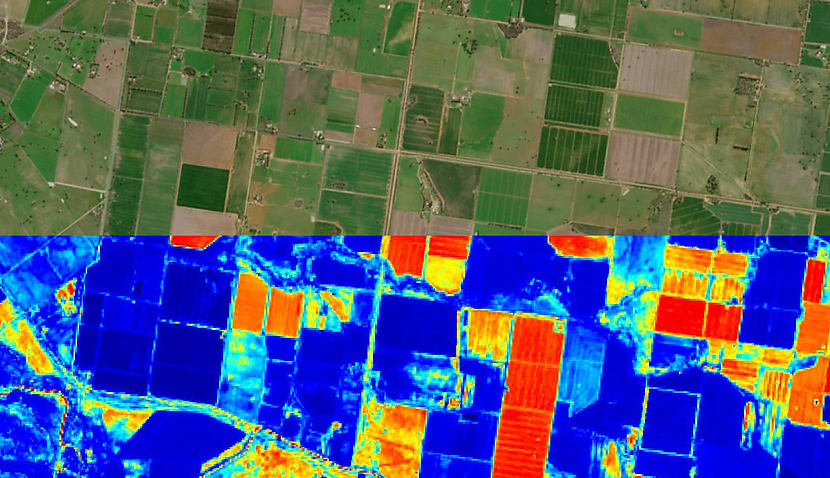
The initiative will establish a sovereign, AI-enabled geospatial digital twin that brings together satellite Earth observation, internet of things and sensor data, climate information and agronomic models into a shared digital environment. The result will be a dynamic virtual replica of Australia’s agricultural landscapes, designed to operate as a whole-of-sector national capability.
Backed by Elders, Meat & Livestock Australia and Charles Sturt University, the digital twin is intended to function as a living research and development engine. Its proponents said it will enable faster, lower-risk innovation while helping industry lift productivity, strengthen resilience and accelerate growth.
Using AI-enabled predictive modelling, the platform will allow users to test scenarios across areas such as climate resilience, biosecurity, water management and on-farm productivity, giving decision makers the ability to assess risks and optimise actions before they are implemented in the real world.
ASII founding chief executive and managing director Professor Andy Koronios said Australia has world-class capability across agriculture, forestry and fisheries but lacked a shared national platform to convert that strength into actionable insight at scale.
“The National Digital Twin provides that missing layer – a sovereign, AI-enabled environment where Australia can model scenarios, test outcomes and make better decisions across productivity, resilience and policy,” Koronios said. “It is national infrastructure for public good, best stewarded by an independent, not-for-profit institute for the benefit of the country.”
Meat & Livestock Australia managing director Mick Crowley said the digital twin would transform the way research and development is conducted.
“It creates the foundation for a new virtual R&D capability, allowing scenario modelling and hypothesis testing inside a replica of agricultural environments,” he said. “That means we can test livestock management options faster, refine trials before committing to large-scale field work, and potentially save millions of dollars and years of research time.”
Charles Sturt University vice-chancellor Professor Renée Leon said the initiative would build on existing data integration efforts at the university, helping turn fragmented agricultural datasets into trusted, scalable outcomes for research, industry and policy.
Elders managing director and chief executive Mark Allison said the digital twin would strengthen on-farm advice by giving agronomists and advisers access to nationally consistent intelligence while keeping judgement and relationships firmly in human hands.
“The aim is to test and refine ideas before they reach the paddock,” he said, “supporting better advice and better outcomes for farmers across Australia.”
 Want to see more stories from trusted news sources?
Make Space Connect a preferred news source on Google.