


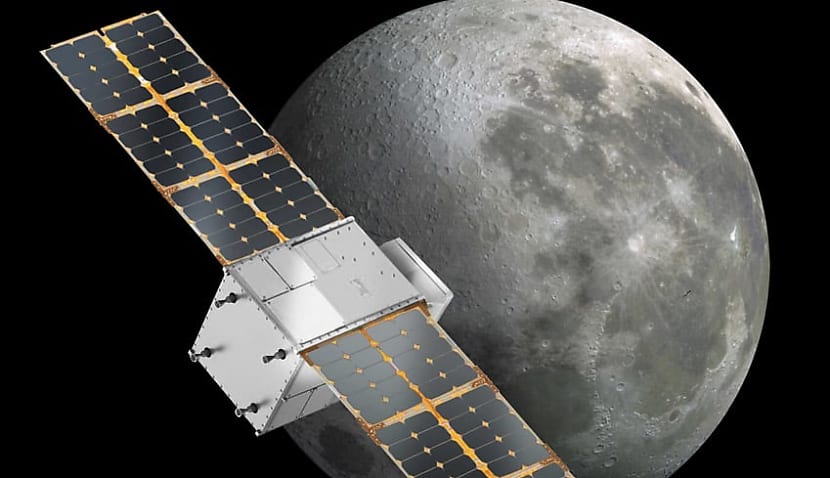
The company said the technology is aimed at supporting the next phase of computing infrastructure in space, where satellite networks and orbital data centres are expected to demand unprecedented levels of power.
Unlike traditional data centres on Earth, which are limited by land availability, electricity supply, and large water requirements for cooling facilities, those in orbit could operate without many of those constraints. In space, computing infrastructure can take advantage of constant solar energy and the naturally cold vacuum environment.
However, reliable power generation remains the key limiting factor for scaling orbital data centres. Rocket Lab’s new silicon solar arrays are designed to address that challenge by delivering lower costs per watt, while supporting large-scale power generation in space.
The company said the arrays could enable gigawatt-level power systems capable of supporting large orbital computing platforms.
Solar panels have long been used to power satellites, typically relying on cells made from gallium arsenide and germanium. These materials perform well in the intense radiation environment of space, but they are also critical minerals with increasingly constrained supply chains.
With the satellite industry forecast to grow dramatically over the next decade and with concepts such as orbital data centres emerging, the industry is facing concerns that traditional solar cell supply chains may struggle to keep pace.
Rocket Lab’s move toward silicon-based solar technology is intended to reduce reliance on those materials, while allowing the company to scale production more rapidly.
The new arrays incorporate radiation-hardened silicon cells designed to remain lightweight and flexible, allowing them to be packaged and deployed in a range of configurations depending on mission requirements.
Rocket Lab said its vertically integrated manufacturing capability allows the company to design and produce the entire solar power system in-house from solar cells and modules to full solar array wings.
Alongside the silicon arrays, Rocket Lab has also developed a hybrid approach that combines high-efficiency solar cells with silicon cells.
This approach allows satellite operators to tailor power systems depending on mission priorities. High-efficiency cells can be used where size, weight, or maximum power output are critical, while silicon cells provide a lower-cost option for large satellite constellations or other cost-sensitive missions.
Hybrid systems can combine both technologies to balance performance, cost, and scalability.
Rocket Lab founder and CEO Peter Beck said the technology would play a key role in enabling future computing infrastructure in orbit: “Space-based data centres are the next frontier in computing infrastructure, and reliable solar power systems will form the backbone of this revolution.”
He said the new arrays were designed specifically for the demands of operating in space, while supporting growing demand for data processing and storage beyond Earth’s atmosphere.
Rocket Lab USA president Brad Clevenger said the company was entering a critical moment in the development of space power systems: “Space infrastructure is becoming as essential to the economy, national security and everyday life as roads, electricity and running water.”
The announcement builds on the company’s semiconductor manufacturing expansion supported by the CHIPS and Science Act in the US. In October 2025, Rocket Lab secured a $23.9 million award under the program to expand semiconductor manufacturing at its facility in Albuquerque in the US state of New Mexico.
The expansion is intended to strengthen domestic production of high-performance semiconductor technologies used in space systems and other advanced applications.
 Want to see more stories from trusted news sources?
Make Space Connect a preferred news source on Google.