


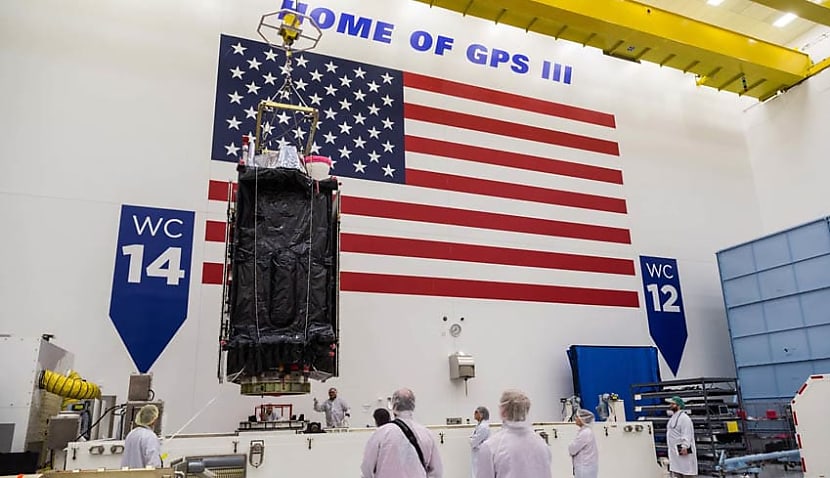
Defence giant Lockheed Martin, working with the United States Space Force, has successfully launched the final satellite in the latest generation of global positioning system (GPS) spacecraft, marking a major milestone in the evolution of space-based navigation and timing.
The satellite, known as GPS III Space Vehicle 10 (SV10), is the last in the GPS III series and delivers significant upgrades in accuracy, resilience and anti-jamming capability. It was launched from Cape Canaveral Space Force Station and quickly established contact, with systems now undergoing final checks before entering full operational service.
The launch caps a rapid series of deployments and sets the stage for the next-generation GPS IIIF satellites, which are already in production.
Stronger, more resilient GPS network
The new satellite introduces a range of enhancements designed to make the GPS constellation more robust in contested environments.
Among the most notable is an optical crosslink demonstration payload, which allows satellites to communicate directly with one another in orbit. This capability is expected to significantly improve resilience by reducing reliance on ground stations and enabling faster, more secure data transfer across the network.
GPS III satellites already deliver major performance gains over older systems, including up to three times greater positional accuracy and eight times stronger resistance to jamming. They also provide secure military-grade signals designed to operate in hostile electronic warfare environments.
These improvements are critical not only for military operations but also for the billions of civilian users who rely on GPS every day, from smartphone navigation and emergency services to financial systems and telecommunications networks.
Next-generation capability on the horizon
The launch of SV10 clears the way for the GPS IIIF series, which will further enhance the system’s performance and survivability. Future satellites will introduce “regional military protection”, delivering more than a sixtyfold increase in anti-jamming capability.
This is designed to ensure reliable positioning, navigation and timing (PNT) in increasingly contested and electronically degraded environments.
Lockheed Martin is currently building 12 GPS IIIF satellites at its Colorado facility, incorporating advanced manufacturing techniques such as digital twins and augmented reality to accelerate production.
Implications for Australia’s defence strategy
The continued evolution of GPS comes as Australia places renewed emphasis on space as a critical warfighting domain.
Under the 2026 National Defence Strategy and the accompanying Integrated Investment Program, Canberra has identified space-based capabilities, including positioning, navigation and timing as essential to future military operations.
Australia’s increasing reliance on precision-guided systems, long-range strike capabilities and integrated joint operations means assured access to resilient PNT services is now a strategic necessity.
The expansion of Defence Space Command reflects this shift, with a growing focus on space domain awareness, satellite communications and the protection of critical space infrastructure.
While the United States’ GPS network remains the backbone of global navigation, the trend towards greater resilience through features such as crosslinks and enhanced anti-jamming aligns closely with Australia’s own priorities.
In an era of intensifying great power competition, ensuring reliable access to space-based services is no longer just a technical requirement, but a core element of national security.
As next-generation GPS satellites begin to roll out, they will not only underpin US and allied military operations but also shape how partners like Australia approach the rapidly evolving space domain.
 Want to see more stories from trusted news sources?
Make Space Connect a preferred news source on Google.