


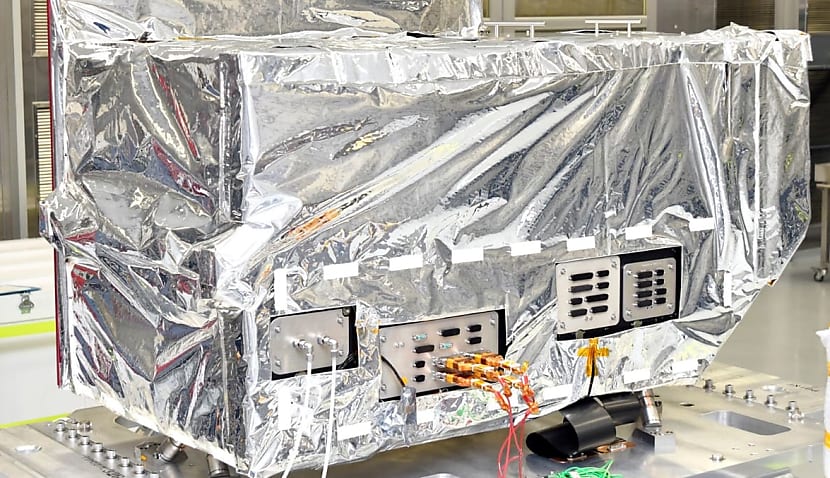
The hardware will support the United States Space Force’s Next Generation Overhead Persistent Infrared Polar program, known as NGP, which is designed to provide advanced missile warning, battlespace awareness and technical intelligence capabilities from orbit.
The latest milestone includes delivery of the sensor subassembly and sensor system controller components that will form part of the program’s first operational payload, Flight Unit 1, currently scheduled for launch in 2028.
According to BAE Systems, the delivery keeps the highly classified program on track as the Space Force accelerates efforts to modernise its space-based missile warning architecture in response to rapidly evolving threats, including hypersonic weapons and advanced ballistic missile systems.
BAE Systems Space & Mission Systems vice president Thai Sheridan said the delivery represented the culmination of years of technical development and integration work.
“This program will provide essential next-generation defence and intelligence capabilities for the Space Force,” Sheridan said.
The NGP system forms part of the broader replacement and expansion of legacy US missile warning satellites that have historically relied on geosynchronous orbit systems such as the Space Based Infrared System (SBIRS).
Unlike earlier architectures, the polar-focused NGP constellation is intended to improve coverage and tracking of missile launches and emerging threats operating across northern polar regions, where traditional coverage has been less comprehensive.
The sensor hardware delivered by BAE Systems includes advanced optics, pointing mechanisms, electronic control systems and spacecraft interface technologies that allow the payload to detect and track missile launches with extremely high precision.
Meanwhile, the sensor system controller acts as the interface between the payload and spacecraft itself, managing telemetry, receiving mission commands, controlling power distribution and enabling highly accurate mirror positioning for target tracking and sensor alignment.
Importantly, BAE Systems said the hardware was originally developed for the geosynchronous component of the wider missile warning architecture before being successfully adapted for the NGP mission, allowing the Space Force to accelerate development timelines and reduce program risk.
A second flight unit for the NGP constellation is already under construction and remains on schedule for delivery ahead of a planned 2030 launch.
The program highlights the growing strategic importance of space-based missile warning systems among Western allies, including Australia, where Defence is increasingly prioritising sovereign space domain awareness and integrated missile defence capabilities.
Australia’s own space ambitions continue to expand under initiatives led by the Australian Defence Force and Australian Space Agency, particularly as Canberra deepens cooperation with the United States on space surveillance, missile tracking and integrated deterrence under frameworks such as AUKUS.
The growing focus on persistent infrared sensing also aligns closely with Defence’s increasing emphasis on integrated air and missile defence, long-range strike and strategic warning systems identified in the 2026 National Defence Strategy.
For allied militaries, the race to modernise missile warning architectures has become increasingly urgent amid rapid advances in hypersonic glide vehicles, manoeuvring ballistic missiles and long-range precision strike systems that are placing unprecedented demands on existing detection and tracking networks.
As a result, next-generation space-based infrared systems such as NGP are increasingly viewed as foundational infrastructure for future joint and coalition operations, enabling earlier warning, more accurate targeting data and improved battlespace awareness across the Indo-Pacific and beyond.
 Want to see more stories from trusted news sources?
Make Space Connect a preferred news source on Google.