


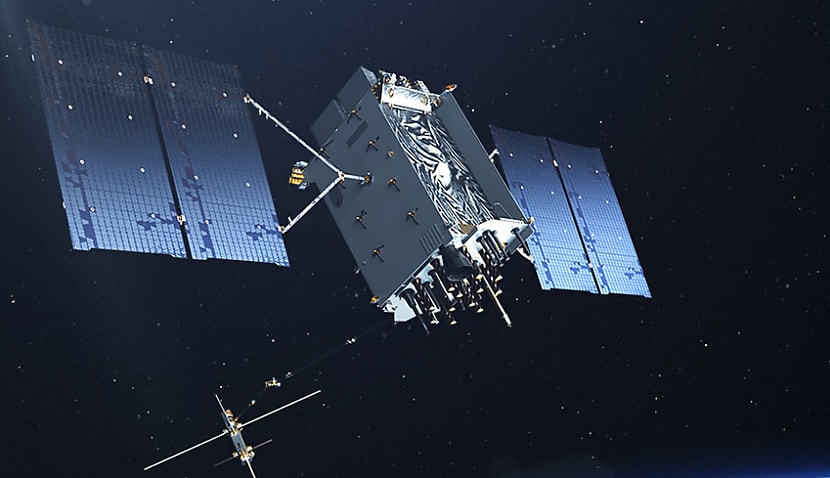
The contract covers Space Vehicles 23 and 24 within the GPS IIIF program and increases Lockheed Martin’s total commitment to 14 satellites under the latest phase of the constellation build-out.
The GPS IIIF satellites are designed to significantly enhance the resilience, accuracy and security of positioning, navigation and timing services. Key upgrades include improved anti-jamming capability, secure military M-Code signals, and a digital navigation payload intended to deliver more reliable performance in contested or degraded environments.
Christina Mancinelli, vice president of global communications and navigation at Lockheed Martin, said: “Modernising the constellation with highly resilient, next-generation space vehicles ensures warfighters have access to the GPS capabilities they require for their missions.”
Lockheed Martin said the new spacecraft will help ensure continued access to robust GPS services for both warfighters and civilian users, at a time when legacy satellites are approaching the end of their operational lifespans and adversary jamming and interference capabilities are becoming more sophisticated.
The company will continue manufacturing the satellites at its facilities in the United States, with production already underway across the broader GPS IIIF program.
The satellites are part of a wider US Space Force effort to modernise and harden the GPS constellation, which underpins critical services including global communications, banking, emergency response systems and transportation networks worldwide.
Lockheed Martin has previously noted that the modernised constellation is intended to deliver significantly improved resilience compared to earlier generations, ensuring continuity of service as space-based threats and electronic warfare capabilities evolve.
“We continue to invest in advanced technology, facilities and the people who are the driving force in the production of this spacecraft that help our military secure peace,” Mancinelli said.
The latest award reinforces the US military’s long-term push to refresh its space-based navigation infrastructure and maintain assured access to GPS as a strategic capability in increasingly contested orbital environments.
 Want to see more stories from trusted news sources?
Make Space Connect a preferred news source on Google.